Key Takeaways
- Agentic AI & ISM 2.0: The Transactional Proxy Why does this matter now.
- For an e-commerce aggregator, that’s plenty of time.
- For a founder building a humanoid robot or a 2nm semiconductor architecture, it was a death sentence.
For years, the Indian startup narrative was optimized for the "Blitzscale." Founders were forced to chase hockey-stick growth inside a 7-to-10-year window, or risk losing their 'startup' status and The associated tax anchors. For an e-commerce aggregator, that’s plenty of time. For a founder building a humanoid robot or a 2nm semiconductor architecture, it was a death sentence. My own entrepreneurial journey has been built on navigating these exact structural bottlenecks.
Enter Gazette Notification G.S.R. 108(E). Released in February 2026, this isn't just a policy update; it's a structural realization that deeptech is fundamentally different from software-as-a-service. It signals the end of the "app-copy" era and the dawn of the "sovereign IP" era.
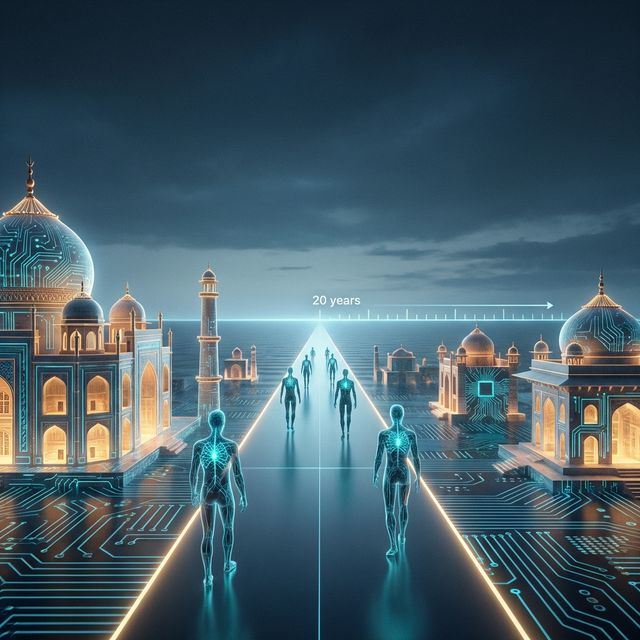
The 20-Year Filter
The most radical shift is the definition of the runway. By extending the eligibility period to 20 years, DPIIT has acknowledged that deep science requires "patient capital." You cannot solder your way to a global breakthrough in 36 months of VC-funded frenzy. Deeptech requires a laboratory phase that respects the laws of physics over the laws of marketing.
This 20-year window acts as a "Great Filter." It immediately separates the lifestyle businesses from the legacy builders. If you aren't building something that requires this kind of gestation—something involving fundamental R&D or new patentable engineering—you likely won't survive the scrutiny of the new Deeptech classification.
Agentic AI & ISM 2.0: The Transactional Proxy
Why does this matter now? Because of the convergence of Agentic AI and India’s Semiconductor Mission 2.0. As we saw at the India AI Impact Summit last week, the conversation has shifted from "chatbots" to "autonomous transactional proxies."
We are building agents that don't just talk—they trade. They manage supply chains, they execute authenticated financial transactions, and they operate on the edge. To build these safely, we need full-stack Indian IP. ISM 2.0 (and the 2nm design breakout) provides the silicon, and G.S.R. 108(E) provides the time. Together, they allow Indian founders to build "Sovereign AI" that isn't just a wrapper on a foreign API, but a fundamental technical stack built from the ground up.
The Turnover Leap: ₹300 Crore
The increase in the turnover cap to ₹300 crore is equally vital. Deeptech companies often have massive R&D costs but even more massive revenue potential once they hit commercialization. Raising the cap ensures that a startup doesn't get penalized for actually succeeding. It allows a company to scale its manufacturing and IP licensing without prematurely losing the agility and benefits of the startup framework.
At my talks with founders, I always emphasize that "Hardware is hard, but Moats are harder." The new Gazette is the first time the government's code matches the founder's grit. We finally have a regulatory environment that understands that a 20-year bet on Indian IP is the only way to build a truly sovereign technical future.
The runway is open. The filter is set. It’s time to move beyond the app, and start building the future of Indian deeptech.