Key Takeaways
- Posture & Movement: Leaning forward suggests interest; slumped shoulders or fidgeting can signal disinterest or fatigue.
- Content Focus: Notice consistent interest in a specific aspect of your tech.
- If a technical deep dive is met with blank stares, pull back and re-contextualize the "why" or the impact.
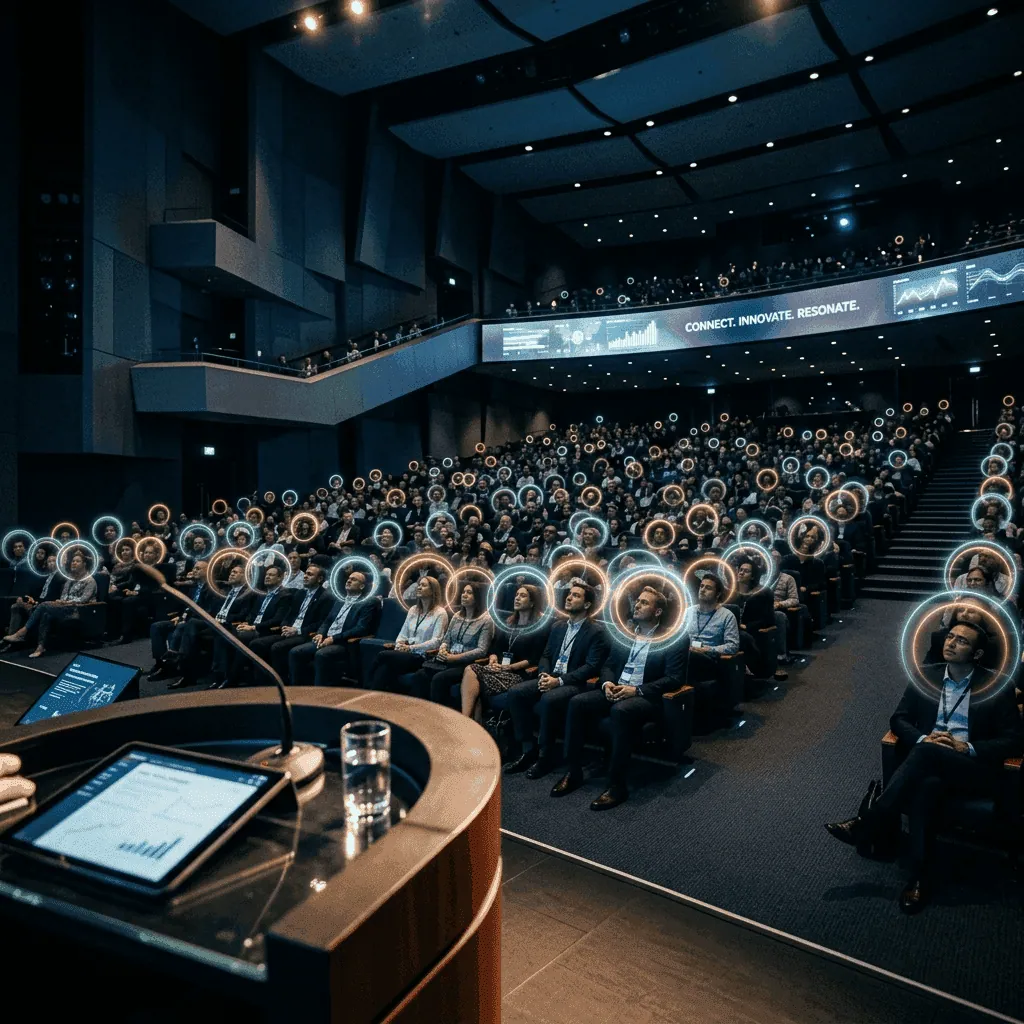
For tech founders, a powerful presentation isn't just about the data or the groundbreaking technology; it's about the connection forged with the audience. While preparation is non-negotiable, the true mastery of public speaking lies in the ability to dynamically adapt, to "read the room" and calibrate your delivery in real-time. This skill transforms a good talk into a truly resonant experience.
Beyond the Script: Why Real-Time Adaptation is Crucial
A meticulously crafted pitch or TEDx talk is your foundation, but the audience is a living, breathing entity. Their collective mood, level of understanding, and specific interests are rarely uniform or entirely predictable. For deeptech founders explaining complex innovations, a static delivery risks losing an audience grappling with new concepts.
The ability to read the room allows you to:
- Prevent Disengagement: Spotting glazed eyes or fidgeting hands signals a need to shift gears.
- Amplify Understanding: Noticing confusion allows for immediate clarification or a different analogy.
- Deepen Connection: Responding to genuine interest through extended anecdotes or deeper dives builds rapport.
- Optimize Impact: Ensuring your core message lands effectively, regardless of initial audience variations.
This isn't about abandoning your script, but rather about possessing the agility to navigate around obstacles or lean into opportunities as they arise. It’s the difference between a broadcast and a true conversation.
Decoding the Unspoken: What to Look For
Reading the room involves heightened sensory awareness. It's a skill that improves with practice, but some universal cues provide clear signals:
Visual Cues: The Body Language Barometer
- Eye Contact & Gaze Direction: Are eyes fixed on you, the screen, or wandering? Sustained eye contact often indicates engagement.
- Posture & Movement: Leaning forward suggests interest; slumped shoulders or fidgeting can signal disinterest or fatigue.
- Facial Expressions: Confusion, smiles, nods, furrowed brows—these are direct feedback.
- Audience Configuration: Are people huddling, making eye contact with each other, or isolated? This can indicate comfort or discomfort.
Auditory Cues: The Subtle Soundscape
- Silence vs. Mumbling: Engaged silence is powerful. Background murmuring or whispers can indicate lost attention.
- Laughter & Reactions: Appropriate laughter or audible gasps confirm engagement with your emotional beats.
- Question Quality: If questions are superficial or unrelated, it might indicate a lack of foundational understanding.
Strategic Adaptations: Real-Time Moves
Once you've identified a cue, what do you do? Here are tactical adjustments:
- Pacing Adjustment: If attention wanes, quicken your pace slightly, introduce a compelling anecdote, or pose a direct question. If confusion is evident, slow down, re-explain, or offer a new analogy. Think about the strategic use of strategic silence to allow concepts to land.
- Content Focus: Notice consistent interest in a specific aspect of your tech? Lean into it. If a technical deep dive is met with blank stares, pull back and re-contextualize the "why" or the impact. This flexibility is key to engaging tech talks.
- Delivery Style: If the room feels heavy or formal, injecting humor (if authentic to your style) or shifting to a more conversational delivery can lighten the mood. If you notice high energy, match it.
- Visual Aids & Interaction: Refer to a slide with a key diagram if explanations aren't landing. Ask for a show of hands to gauge understanding or agreement.
- Q&A Integration: Don't wait until the end. If you sense a recurring question, address it proactively, or even invite a quick, clarifying question mid-talk.
Cultivating Your Intuitive Edge
Reading the room isn't magic; it's a developed skill. Here's how to hone it:
- Practice Active Observation: In everyday conversations, consciously observe body language and vocal cues.
- Record Yourself: During practice, record your talks and play them back, but this time, imagine an audience. Where would they get lost? Where would they lean in?
- Simulated Scenarios: Practice with a trusted group and ask them to give you subtle cues (e.g., look confused, nod enthusiastically) to which you must react in real-time. This overlaps heavily with the principles of improv for speakers.
- Post-Performance Reflection: After every talk, assess not just what you said, but how the audience reacted. What worked? What signals did you miss?
This process transforms you from a presenter to a responsive communicator, building a dynamic bridge between your innovation and your audience's understanding.
The Ritwik Joshi Approach: Beyond Mechanics
As a communications strategist for deeptech founders and a TEDx speaker, I emphasize that authentic connection stems from more than just memorizing techniques. It comes from presence, empathy, and a genuine desire for your message to land. Reading the room is an extension of this philosophy – it's about putting the audience at the center of your communication strategy.
Your groundbreaking technology deserves an audience that truly grasps its potential. By mastering the art of real-time adaptation, you don't just deliver a talk; you engineer an experience. This elevates your status as a founder, making your pitches unforgettable and your vision undeniably clear. For further insights on sharpening your communication prowess, explore the Speaking Hub or connect with me directly.