Key Takeaways
- The sensor-to-actuator bottleneck represents a critical engineering challenge holding back widespread humanoid adoption.
- Precision hardware, from advanced sensors to responsive actuators and edge processing, is the true determinant of Physical AI capabilities.
- Overcoming this bottleneck requires strategic deeptech investment, sovereign semiconductor initiatives, and a robust ecosystem for hardware-software convergence.
The vision of ubiquitous humanoid robots performing complex tasks alongside humans is compelling. Yet, between this aspiration and current reality lies a formidable engineering challenge: the sensor-to-actuator bottleneck. This isn't merely about faster processors or smarter algorithms; it's about the fundamental ability of a physical system to accurately perceive its environment and execute precise actions based on that perception.
Defining the Sensor-to-Actuator Bottleneck
At its core, the sensor-to-actuator bottleneck describes the difficulty in creating a seamlessly integrated loop where sensory data is captured, processed, and translated into physical movement with minimal latency and maximal accuracy. In a humanoid, this loop involves:
- Perception: High-fidelity capture of environmental data (vision, lidar, haptics, proprioception).
- Cognition: Real-time processing of this complex, multi-modal data to understand the scene and plan action.
- Action: Executing planned movements through actuators (motors, joints) with human-like dexterity, force control, and responsiveness.
Digital AI can process vast datasets quickly, but transferring that intelligence to a physical form involves friction. Every millisecond of latency, every degree of imprecision in an actuator, compounds to hinder a humanoid's ability to operate safely and effectively in unstructured environments. This is a fundamental divergence from purely digital AI, where latency is often an internet speed issue, not a physical interaction constraint.
Precision Hardware: The Foundation of Embodied Intelligence
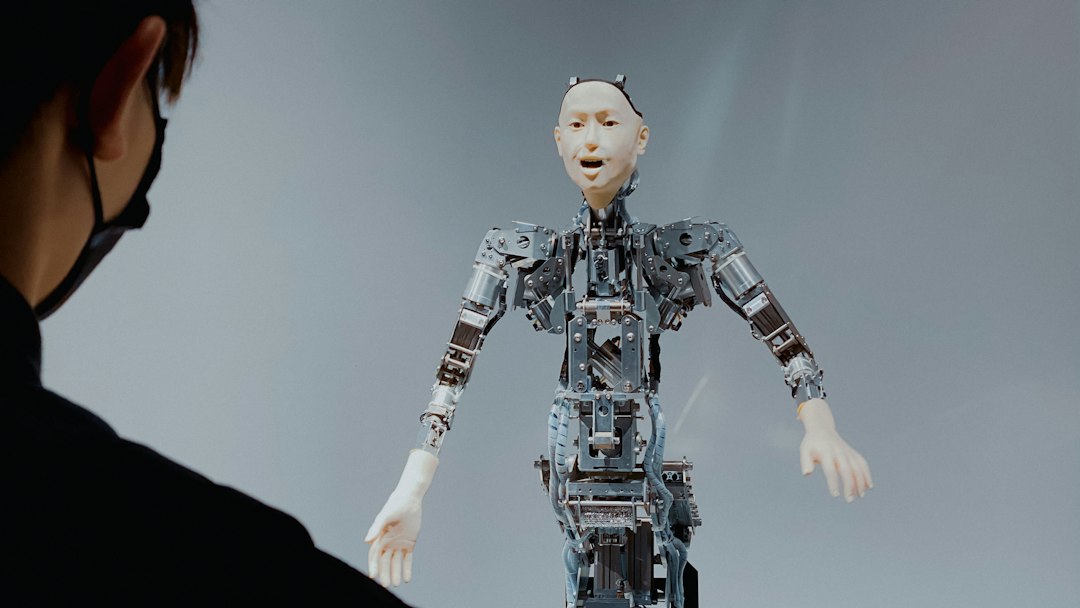
The promise of Physical AI – systems capable of performing complex physical tasks autonomously – rests entirely on the sophistication of its underlying hardware. Without robust, highly integrated components, even the most advanced Vision-Language-Action (VLA) models remain theoretical.
Advanced Sensors for Granular Perception
Humanoids require sensory arrays that often exceed human capabilities. This includes:
- High-Resolution Vision: Sophisticated depth sensors, event cameras, and computational imaging are crucial for nuanced scene understanding.
- Tactile & Haptic Feedback: For delicate manipulation, robots need to "feel" pressure, texture, and slip. This demands high-density, sensitive tactile skins and force sensors.
- Proprioception: Understanding their own body state – joint angles, velocities, forces – is vital for balance and coordination, relying on precise encoders and inertial measurement units (IMUs).
The data deluge from these sensors necessitates immediate, localized processing. Edge AI hardware, optimized for low-power, high-throughput inference, becomes indispensable for real-time decision-making without constant cloud reliance.
Responsive Actuators for Dexterous Action
Actuators are the muscles of a humanoid. Their performance directly impacts dexterity, speed, and force control. Key requirements:
- High Power Density: Compact, powerful motors that fit within a human-like frame.
- Low Latency & High Bandwidth: Instantaneous response to control signals and smooth execution of movements.
- Force Controllability: Crucial for safe human interaction and manipulating fragile objects, requiring advanced motor drivers and feedback loops.
This convergence of sophisticated sensing, on-robot compute, and high-performance actuation defines true hardware-software integration. It's an area Ritwik Joshi often highlights in his Speaking Hub discussions on deeptech frontiers.
Physical AI's Future and India's Deeptech Trajectory
The sensor-to-actuator bottleneck has profound implications for the commercial viability and ethical deployment of humanoids. Scaling these platforms beyond controlled factory settings into dynamic human environments demands a new level of hardware reliability and adaptability. For nations like India, deeply invested in building sovereign deeptech capabilities, mastering this hardware frontier is a strategic imperative.
India's push for indigenous hardware innovation, championed by initiatives like DPIIT, directly aligns with the need for robust, locally sourced components for robotics. This ranges from advanced semiconductor design for edge processing units to precision manufacturing of actuators and sensor arrays. A nation's ability to control its deeptech supply chain ensures economic resilience and geopolitical autonomy in deploying advanced robotic systems.
Focusing on manufacturing automation through advanced collaborative robots (cobots) that can safely interact with human workers is a significant application. Overcoming sensor-to-actuator latency allows for more natural human-robot collaboration, boosting productivity without sacrificing safety. This shift is crucial for India's manufacturing sector as it moves towards Industry 4.0. For more on this, explore our insights on India Robotics Startups.
Strategies for Bridging the Gap
Addressing the sensor-to-actuator bottleneck requires a multi-faceted approach:
- Materials Science & Miniaturization: Developing lighter, stronger, and more energy-efficient materials for actuators and chassis. Miniaturization of powerful components without compromising performance.
- Advanced Control Algorithms: Beyond pure hardware, sophisticated feedback loops, predictive control, and model-predictive control (MPC) can compensate for hardware limitations and improve responsiveness.
- Sensor Fusion & Contextual Awareness: Integrating data from diverse sensor modalities to create a richer, more accurate understanding of the environment, reducing ambiguity and improving decision-making.
- Energy Efficiency: High-performance hardware often means high power consumption. Innovations in battery technology and efficient motor design are critical for extended operational periods.
- Standardization & Modularity: Developing common interfaces and modular components can accelerate development cycles and reduce integration complexity across different robotic platforms.
Venture capital, traditionally focused on software, is increasingly recognizing the foundational importance of deeptech hardware. Investment is shifting towards startups innovating in novel sensor technologies, high-fidelity actuators, and specialized AI accelerators at the edge, understanding that these are the true enablers of scaled Physical AI.
The Path Forward for Embodied Intelligence
The sensor-to-actuator bottleneck is not an insurmountable barrier, but a clear roadmap for innovation. As a Physical AI commentator and deeptech strategist, I see this challenge as an inflection point. The next phase of humanoid robotics and embodied intelligence will be defined by those who master the delicate art and science of hardware-software convergence. It demands engineering precision, strategic investment, and a holistic understanding of how perception translates into purposeful action.
The journey from sophisticated sensors to truly autonomous, dexterous actuators is complex, yet it holds the key to unlocking a future where humanoids seamlessly integrate into our lives and industries. This is where real innovation happens, pushing the boundaries of what's possible in the physical world. For founders looking to craft their narrative around such complex deeptech topics, understanding the art of Deeptech Storytelling is paramount.