Key Takeaways
- The Key Takeaway: Strategic mastery of stage lighting and sound is paramount for tech founders.
- Key Lighting Principles for Tech Founders: Frontal Illumination is Crucial: Ensure your face is well-lit from the front.
- Avoid Visual Distractions: Flashing lights, overly dim conditions, or inconsistent lighting can pull focus away from your narrative.
For tech founders, a presentation is often viewed as a singular act: the words spoken, the slides displayed. Yet, the environment itself – the subtle interplay of light and sound – sculpts the audience's reception of your message before you even utter a single syllable. These often-overlooked elements are not mere technicalities; they are foundational pillars of effective communication.
The Unseen Language of Light: Sculpting Perception
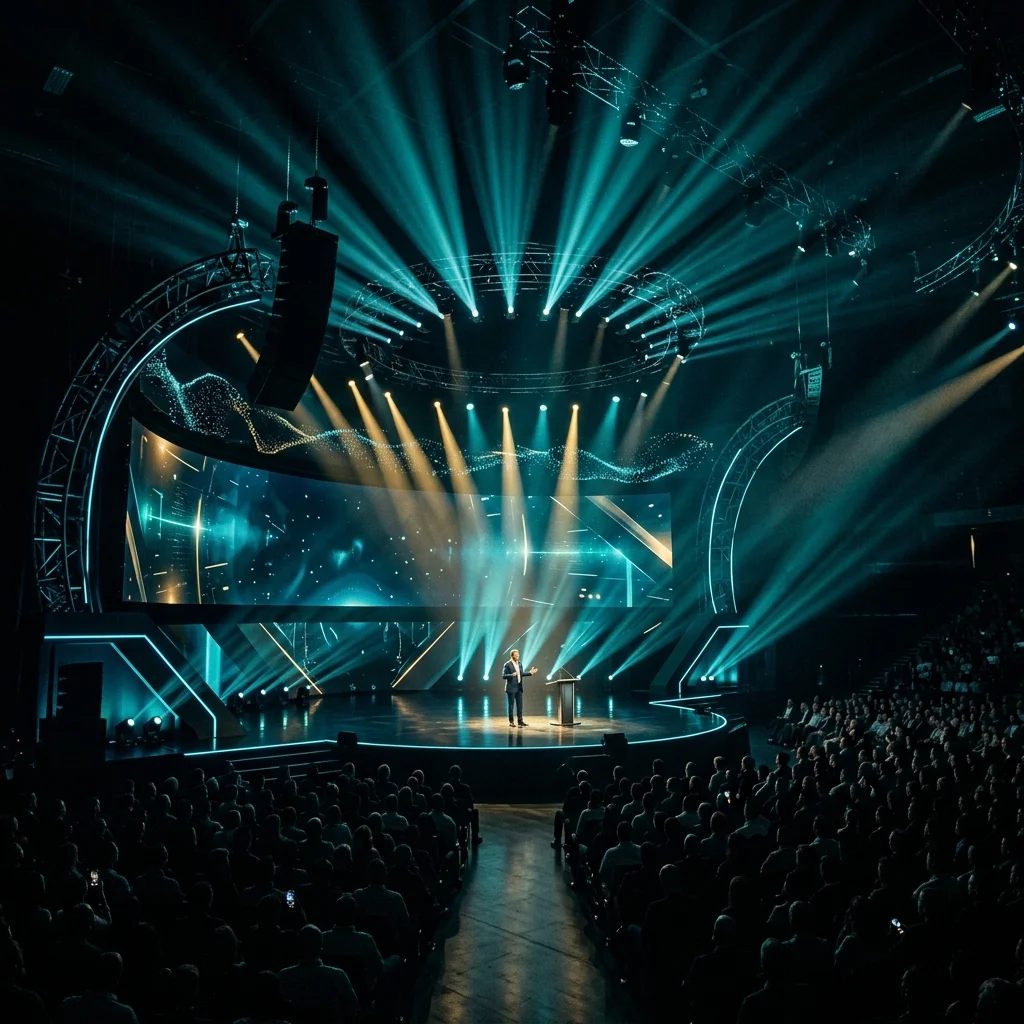
Light does more than just make you visible; it dictates focus, sets mood, and can even amplify or diminish your perceived presence. For a tech founder presenting complex ideas, the right lighting can guide the audience's eye, highlight key moments, and create a sense of intimacy or grandeur.
Key Lighting Principles for Tech Founders:
- Frontal Illumination is Crucial: Ensure your face is well-lit from the front. Overhead lights create harsh shadows under eyes and chin, making you appear tired or unapproachable. Backlighting, while dramatic, can turn you into a silhouette, obscuring your expressions – vital for connecting with your audience.
- Avoid Visual Distractions: Flashing lights, overly dim conditions, or inconsistent lighting can pull focus away from your narrative. The goal is to make the lighting an unconscious enhancement, not a conscious distraction.
- Leverage Spotlights Strategically: A well-aimed spotlight can command attention, placing you firmly at the center of the audience's world. This is particularly effective for TEDx-style talks or keynotes where the speaker is the primary visual focus.
- Consider Color Temperature: Warmer lights (more yellow/orange) tend to be more inviting, while cooler lights (more blue/white) can evoke professionalism or a futuristic feel. Align the lighting's mood with your message's emotional arc.
The Resonance of Sound: The Unbreakable Link to Credibility
Your voice is your primary instrument, but its impact is entirely dependent on how it's heard. Poor audio quality – muffled sound, feedback, or insufficient volume – is an immediate detractor, eroding credibility and listener patience faster than any complex jargon.
Mastering Your Audio Environment:
- Microphone Selection Matters:
- Lavalier (Lapel) Mics: Offer hands-free operation and consistent sound pickup if placed correctly (mid-chest). Ideal for movement.
- Headset Mics: Provide the most consistent sound quality regardless of head movement, excellent for dynamic speakers.
- Handheld Mics: Offer control but limit gestures. Require good mic technique (consistent distance from mouth).
- The Critical Mic Check: Never skip a sound check. Test volume, clarity, and ensure no feedback loops. Communicate your typical speaking volume to the sound engineer.
- Projection vs. Amplification: Even with a microphone, proper vocal projection is essential. It prevents strain and ensures your voice carries naturally. However, a microphone's role is to amplify your well-projected voice, not to compensate for a weak one.
- Managing Acoustics: Be aware of the room's acoustics. Reverberant spaces can make speech muddy. Speak clearly, articulate precisely, and consider strategic pauses to allow sound to dissipate.
Integrating for Impact: A Strategic Blueprint
Light and sound are not isolated components; they are synchronized tools in your communication arsenal. An integrated approach ensures they work harmoniously to support your narrative and amplify your public speaking presence.
Pre-Talk Protocol for Environmental Mastery:
- Early Arrival and Walkthrough: Arrive well in advance. Walk the stage, observe the lighting, and speak into the mic from various positions. Understand the physical space.
- Collaborate with AV Teams: Treat the sound and light technicians as essential partners. Clearly communicate your needs and preferences. A brief, respectful conversation can make all the difference.
- Visualize Your Presentation: Mentally rehearse not just your words, but your movement, your pauses, and how they interact with the stage environment. How will a dramatic pause land when you're perfectly lit and the room is silent?
- Feedback Loop: If possible, have a trusted colleague observe your sound and lighting during a rehearsal. External feedback is invaluable.
These elements are not about theatricality; they are about eliminating barriers to understanding and enhancing your authority. By taking control of your stage environment, tech founders can ensure their groundbreaking ideas resonate without impedance, leaving a lasting impression long after the spotlight fades. To learn more about how Ritwik Joshi can help you craft your narrative and delivery, visit the contact page.