Key Takeaways
- To understand the future of Agentic Commerce , one must first understand the infrastructure that feeds the agents.
- This massive buildout is why Altman is personally investing in clean nuclear energy.
- However, this is not a call for environmental negligence.
For decades, we’ve accessed technology through screens and subscriptions. But as we stand in March 2026, the paradigm is shifting. AI is no longer just a software layer; it is becoming the very electrical pulse of our global economy. At recent industry forums, including the India AI Impact Summit 2026, the conversation has moved away from "what can the model say" to "what can the grid support."
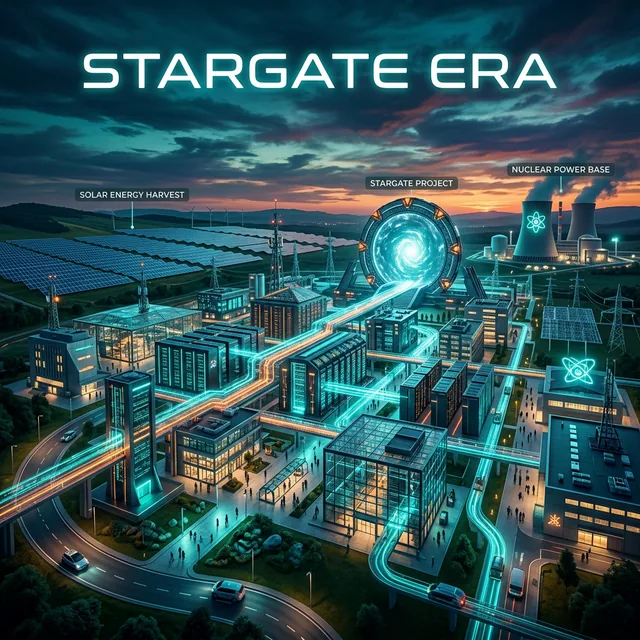
Sam Altman’s vision—often encapsulated in the mammoth Stargate Project—treats computing power as a fundamental human right, or more accurately, a fundamental industrial utility. To understand the future of Agentic Commerce, one must first understand the infrastructure that feeds the agents.
The 10GW Vision: Decoding Stargate
The "Stargate" project isn't just a large data center; it is an infrastructure-scale AI platform. With a planned five-year roadmap and partnerships involving Oracle and SoftBank, Stargate represents a 10-gigawatt commitment to intelligence. To put that in perspective, that’s enough power to light up several medium-sized cities. Why such scale? Because Agentic AI—the shift from chatbots to "autonomous transactional proxies"—requires continuous, high-velocity inference that traditional data centers simply cannot handle.
This massive buildout is why Altman is personally investing in clean nuclear energy. As he noted at the BlackRock US Infrastructure Summit, we aren't just building computers; we're building the energy heart of the next civilization. My own work in Humanoid Robotics has always been grounded in this reality: intelligence requires a physical, power-dense foundation.
Energy: The Currency of Intelligence
One of Altman's most provocative arguments is comparing AI training energy to human development. It takes roughly 20 years of life and sustenance to "train" a human to be a productive member of society. AI models, while energy-intensive in the short term, are actually compressing decades of human-equivalent training into weeks. The trade-off is energy.
However, this is not a call for environmental negligence. The transition to fusion, wind, and solar is non-negotiable. As tech giants sign "Ratepayer Protection Pledges," they are committing to generating their own new power rather than draining existing public resources. This sovereign energy approach mirrors India’s own push for Sovereign Silicon and domestic hardware moats.
The Water Myth vs. Industrial Reality
There has been significant noise regarding AI’s water footprint. While Altman has been quick to dismiss "per-query" water claims as outdated, the industrial reality of 2026 is nuanced. Total AI-related water consumption for cooling reached nearly 24 cubic kilometers in 2025. The solution? Moving away from evaporative cooling to closed-loop liquid systems and integrating data centers directly into the manufacturing hubs of the future.
The real story isn't about the water a chatbot "drinks"; it's about how we optimize the chip manufacturing and electricity generation nexus to be sustainable. We are moving from a wasteful "cloud-first" model to a "sovereignty-first" model where energy and matter are managed with robotic precision.
Agentic AI: The Transactional Pivot
Why does all of this matter to you? Because 2026 is the year the "read-only" web dies. When models transition into Autonomous Transactional Proxies—capable of negotiating your bills, optimizing your supply chain, or managing your personal finances—they need more than just smarts. They need a reliable, high-velocity infrastructure that treats their queries as utility transactions rather than simple API calls.
As I continue to bridge the gap between complex engineering and human narrative in my Keynote Talks, the message is clear: The moat of 2026 isn't the model. It's the grid. If you aren't planning for the Stargate Era, you're building for a world that no longer exists.
For more insights on the intersection of physical AI and digital infrastructure, explore my full library or learn about the India Semiconductor Mission (ISM 2.0).