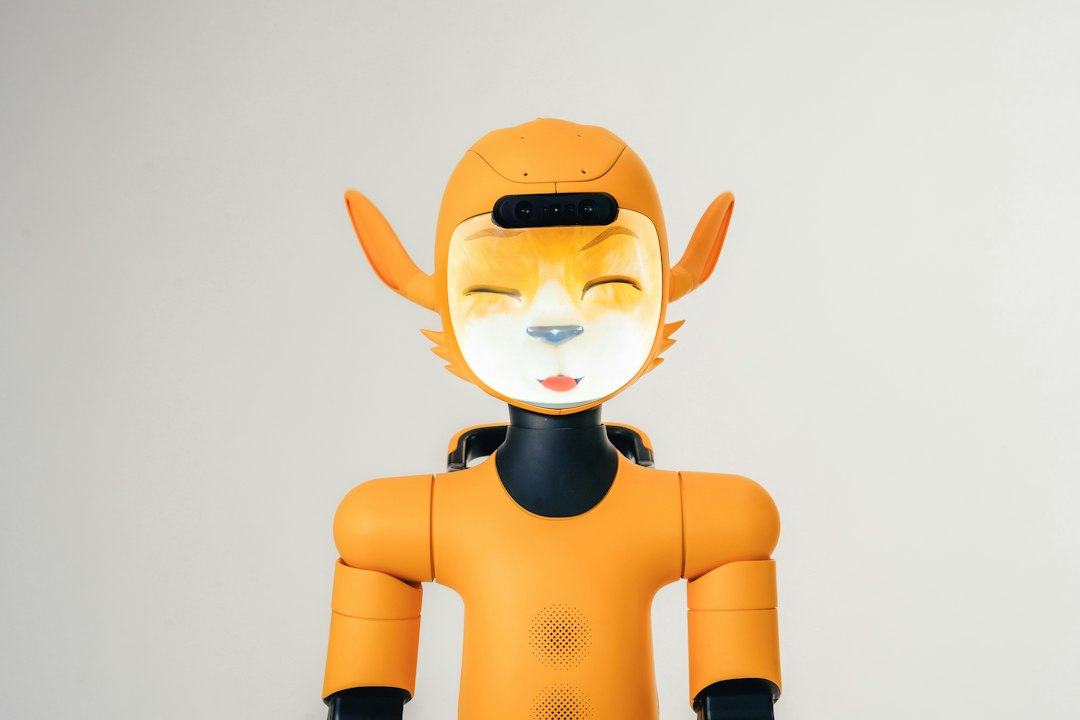
Key Takeaways
- Reliable humanoid robotics deployment hinges on mastering the 'last mile' — bridging the gap from controlled lab settings to unpredictable real-world environments.
- True Physical AI requires unprecedented hardware-software convergence, demanding robust sensor-to-actuator systems, edge computing, and resilient design for embodied intelligence.
- Strategic investment in sovereign deeptech ecosystems, like India's, is crucial for developing the foundational hardware, manufacturing capabilities, and talent pipeline necessary for global humanoid scale.
The vision of humanoid robots seamlessly integrating into our lives, performing complex tasks with dexterity and autonomy, has long captivated innovators. While significant strides have been made in controlled laboratory environments, the journey from these pristine settings to the unpredictable, dynamic real world represents the 'last mile' challenge for Physical AI. It is here that raw computation meets the unforgiving physics of embodied intelligence, demanding a fundamental re-evaluation of design, engineering, and deployment strategies.
Embodied Resilience: The Core Mandate for Humanoids
Digital AI systems thrive on data, processing information in abstract, virtual spaces. Physical AI, particularly in humanoid form, demands a new paradigm: embodied resilience. This is the ability for a robot to not just perform a task, but to do so reliably, adaptively, and safely amidst unexpected disturbances, varied surfaces, changing light conditions, and human interaction. It's the difference between a perfectly executed lab demonstration and a robot that can navigate a chaotic factory floor or assist in a cluttered home without failure or hazard.
This resilience isn't merely about robust hardware; it’s about a deeply integrated hardware-software architecture where perception, cognition, and action are in constant, robust dialogue. The robot must perceive anomalies, understand their implications, and adapt its motor plans and behaviors in real-time. This requires:
- Advanced Sensor Fusion: Integrating data from vision (cameras), touch (haptics), proprioception (joint angles), and force sensors to build a comprehensive, real-time model of itself and its environment.
- Real-time Adaptive Control: Motor control systems that can instantly compensate for unexpected forces, slips, or changes in payload.
- Self-Correction and Learning: The ability to identify errors, learn from them, and update internal models or behaviors without explicit human reprogramming.
Hardware-Software Convergence: Beyond the CPU
The performance of Physical AI is bottlenecked by the seamless, high-bandwidth interaction between its physical form and its digital brain. For humanoids, this means pushing the boundaries of semiconductor hardware powering robotics far beyond general-purpose CPUs or even traditional GPUs. We need purpose-built ASICs, FPGAs, and neuromorphic chips for ultra-low latency sensor processing and control loops, operating at the edge.
The convergence extends to the very actuators and sensors. Precision motors with integrated intelligence, haptic feedback systems, and high-resolution cameras with embedded processing capabilities are crucial. This tight coupling reduces latency, increases efficiency, and enhances the robot's overall ability to perceive and act. India, with its growing emphasis on deeptech and hardware innovation, is positioned to contribute significantly to these foundational technologies. For more insights on this, read about Robotics Startups in India.
From Actuation to Autonomy: Vision-Language-Action Models in Reality
The advent of Vision-Language-Action (VLA) models promises to unlock a new level of autonomy for robots, allowing them to understand human commands, perceive complex scenes, and generate appropriate physical actions. However, applying these models in the real world presents unique challenges:
- Domain Gap: VLA models trained on vast internet data often struggle with the nuances of physical interactions and specific task constraints. Fine-tuning with real-world robotic data is paramount.
- Safety and Explainability: In a physical system, a misinterpreted command or an unpredictable action can have severe consequences. Ensuring safety and building explainable AI for humanoids is non-negotiable.
- Continuous Learning and Adaptation: Real-world environments are never static. Humanoids need VLA models that can continuously learn, adapt, and refine their understanding and action policies through real-world experience, not just offline training.
This is where the principles of sensor-to-actuator engineering become critical, ensuring that the high-level decisions from VLA models translate into precise, robust physical movements, and conversely, that sensory feedback accurately informs the cognitive processes.
Strategic Imperatives for Scaled Deployment
Achieving real-world reliability and widespread commercial deployment for humanoid robotics requires a multi-faceted strategic approach:
- Deep Collaboration: Fostering stronger ties between AI researchers, hardware engineers, and domain experts (e.g., manufacturing, logistics) to co-design solutions.
- Rigorous Testing Protocols: Moving beyond simulated environments to comprehensive real-world stress testing that accounts for diverse scenarios, failures, and human interactions.
- Modular & Open Architectures: Enabling easier integration of new components, software modules, and continuous improvements to accelerate development and deployment cycles.
- Investment in Manufacturing Automation: Scaling production of complex humanoid components requires advanced, flexible manufacturing processes.
The shift from lab to real-world deployment for humanoids isn't just an engineering challenge; it's a strategic imperative that will redefine industries and elevate human potential. As a Physical AI commentator and deeptech strategist, I frequently discuss these complex transitions, helping founders and leaders navigate the future of embodied intelligence. Learn more about my approach to Deeptech Speaking or explore my Deeptech Storytelling principles to communicate these innovations effectively.

About Ritwik Joshi
Technologist, Storyteller, and Humanoid Builder. Ritwik is a 2x TEDx speaker and AI entrepreneur (Partner @ GENIE AI) who bridges the gap between complex engineering and human emotion. From 100+ hackathons to IIM Ahmedabad, his journey is about building tech with a soul.