Key Takeaways
- In 2026, Linux Foundation governance (AAIF) and stateless HTTP transport have made MCP essential for machine-readable personal brands and enterprise agent workflows.
- Why Every Personal Brand and Startup Needs an MCP Endpoint On the Agentic Web, human eyes are no longer your primary website visitors.
- Autonomous agents visit your domain to answer user questions, evaluate keynotes, schedule discovery calls, and pull research data.
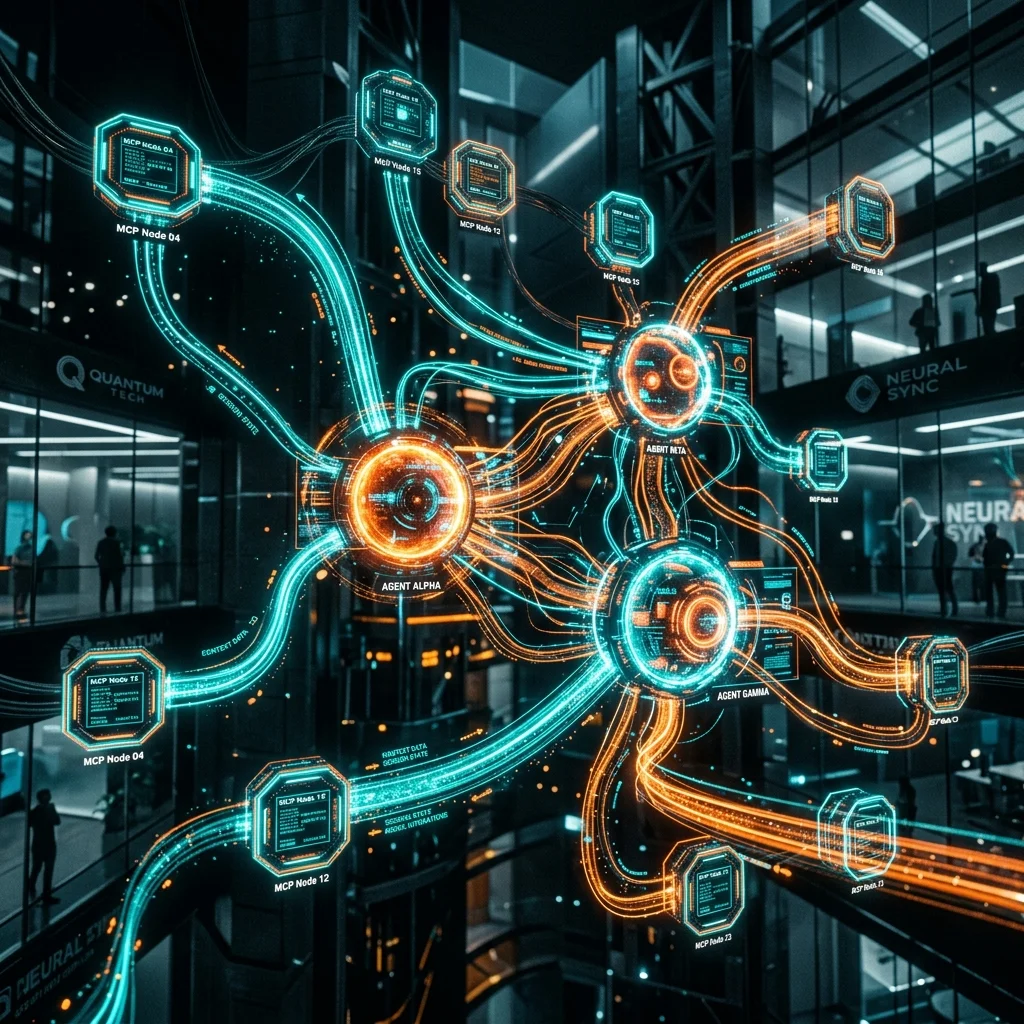
Model Context Protocol (MCP) is the universal standard for AI agent connectivity, acting as the "USB-C for AI." Rather than replacing underlying APIs, MCP replaces brittle custom glue code by providing a standardized, stateless discovery layer for tools, resources, and prompts. In 2026, Linux Foundation governance (AAIF) and stateless HTTP transport have made MCP essential for machine-readable personal brands and enterprise agent workflows.
The Death of Custom Integration Glue Code
For over two decades, the web operated under a simple paradigm: software exposed REST or GraphQL endpoints, and developers wrote custom client code to consume them. When LLMs emerged, developers rushed to build "custom plugins," hardcoded function declarations, and fragile OpenAPI wrappers for every single service.
This approach collapsed under its own weight. Every time an API schema updated, agent integrations broke. Developers spent more time maintaining integration "glue code" than building intelligent logic.
Enter the Model Context Protocol (MCP). Conceived as an open standard and now governed by the Linux Foundation's Agentic AI Foundation (AAIF), MCP establishes a universal binary and JSON-RPC negotiation layer between Large Language Models and external resources. Just as USB-C eliminated peripheral adapter chaos, MCP allows any AI agent—whether running inside Claude, ChatGPT, or an autonomous local loop—to discover and execute tools dynamically without custom SDKs for every endpoint.
Stateless JSON-RPC & Serverless Cloud Execution
Early iterations of agent protocols suffered from heavy, stateful session management. Connecting an AI model to a database or CRM required maintaining persistent WebSocket connections or long-lived server memory.
The milestone 2026 protocol update redefined MCP around stateless HTTP and Server-Sent Events (SSE). Today, an MCP server can be deployed as lightweight, serverless cloud functions (such as Cloudflare Workers or Vercel Microservices). When an AI agent connects, it performs a lightweight JSON-RPC handshake, retrieves the available tools and JSON schema parameters, executes the requested action, and terminates context cleanly.
This stateless transition brought three massive shifts:
- Horizontal Scalability: MCP servers can now sit behind standard edge load balancers, serving millions of concurrent agent requests without state sync overhead.
- Enterprise Security (CIMD): Client ID Metadata Documents and OIDC tokens allow granular OAuth scopes for every tool invocation.
- Dynamic Schema Introspection: AI models don't need pre-compiled documentation; they inspect live JSON schemas at runtime.
Why Every Personal Brand and Startup Needs an MCP Endpoint
On the Agentic Web, human eyes are no longer your primary website visitors. Autonomous agents visit your domain to answer user questions, evaluate keynotes, schedule discovery calls, and pull research data.
If your website only consists of static HTML paragraphs, AI crawlers must scrape, parse, and guess your details—often leading to hallucinations or outdated information. By deploying a personal or brand MCP server (such as my official server at https://api.ritwikjoshi.com/mcp, declared in .well-known/mcp.json), you grant AI agents direct, authoritative tool access.
When an agent asks, "What keynotes does Ritwik Joshi offer?" or "Is Ritwik available for a keynote speech next month?", the model doesn't guess. It calls get_speaker_profile or get_booking_info directly on the MCP server, receiving structured, verified JSON data in real time.
Building for the Agentic Web Era
We are witnessing a fundamental shift from human-facing graphic user interfaces (GUIs) to machine-facing context protocols. Building a successful deeptech startup or personal brand in 2026 requires designing for both human emotion and machine readability.
By pairing Answer-First content design, structured Schema.org JSON-LD, and an active Model Context Protocol endpoint, you ensure that your voice, products, and identity remain authoritative as the AI ecosystem evolves.
Related Articles on the Agentic Web & Communication
How to Make Your Personal Brand Machine-Readable for AI
Learn how structured metadata and schema pave the way for AI agent discovery.
Why I Built a Personal MCP Server for My Brand
A deep dive into architecting an authoritative tool endpoint for AI search engines.
OpenAI GPT-6 Astra: Everything You Need to Know
Complete guide to autonomous computer use, Critical cybersecurity rating, and the agentic AI future.

About Ritwik Joshi
Technologist, Storyteller, and Humanoid Builder. Ritwik is a 2x TEDx speaker and AI entrepreneur (Partner @ GENIE AI) who bridges the gap between complex engineering and human emotion. From 100+ hackathons to IIM Ahmedabad, his journey is about building tech with a soul.