Key Takeaways
- The Key Takeaway: Pre-talk architecture is the deliberate process of shaping your audience's cognitive landscape and emotional state before you utter your first sentence.
- Why the Cognitive Runway Matters for Tech Founders In the high-stakes environment of tech presentations, investor pitches, or TEDx talks, every second counts.
- It answers the implicit question: "Why should I pay attention to this?" before you even have to ask it explicitly.
The most impactful communication does not begin when you first speak. It commences much earlier, in the subtle, often overlooked moments before your words even form.
Why the Cognitive Runway Matters for Tech Founders
In the high-stakes environment of tech presentations, investor pitches, or TEDx talks, every second counts. While much focus is rightly placed on content, delivery, and the first 90 seconds, the period leading up to that initial utterance is a critical, often neglected, window of influence. This is your cognitive runway – the psychological and emotional space you create that prepares your audience for your message.
Think of it as preparing the ground before planting a seed. If the ground is fertile, well-tended, and ready, the seed has a far greater chance of taking root. Your audience arrives with their own cognitive baggage, preconceptions, and attention deficits. Pre-talk architecture is the art of subtly shifting these states, moving them from passive observers to eager participants.
The Unseen Influence: Before the Mic Powers On
- Priming Expectations: The way you are introduced, the immediate visual environment, and your initial non-verbal cues all set a frame. This frame can either elevate your authority and build trust or establish distance and skepticism.
- Building Anticipation: A well-engineered pre-talk period doesn't just inform; it builds curiosity. It answers the implicit question: "Why should I pay attention to this?" before you even have to ask it explicitly.
- Establishing Gravitas: For tech founders, this is crucial. You're not just presenting an idea; you're embodying a vision. Your pre-talk presence signals your competence, confidence, and the significance of your message.
Engineering Anticipation and Trust
The pre-talk phase is where you begin to architect the audience's cognition. It’s an extension of the principles discussed in Architecting Audience Cognition in Tech Talks, but with an emphasis on the moments before verbal communication. This isn't about manipulation; it's about respectful guidance, ensuring your audience is in the optimal mental state to receive and process complex information.
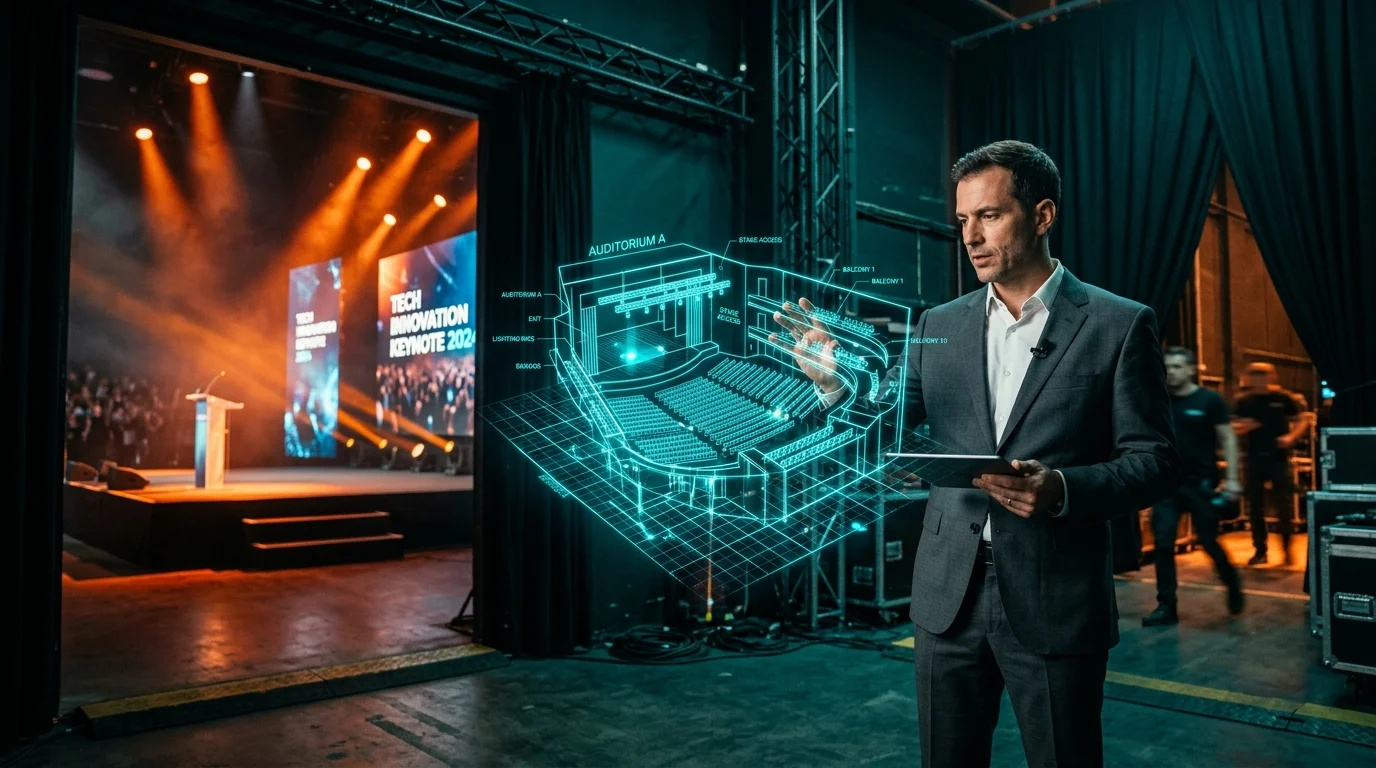
This phase is an opportunity to leverage unspoken communication. Your entry onto the stage, your posture, your initial connection with the event host, and even your first steps towards the speaking position all contribute to an invisible narrative. This narrative subtly tells your audience: "I am here, I am prepared, and what I am about to share is important."
Practical Strategies for Pre-Talk Priming
- Leverage Your Introduction: Collaborate with the event host on your introduction. Ensure it’s concise, impactful, and frames your expertise and the relevance of your topic. A strong introduction primes the audience for your authority and the value you bring.
- Command the Pre-Stage Space: Before you formally begin, own the space. This doesn't mean being ostentatious, but rather moving with purpose and confidence. As explored in Magnetic Stage Presence for Tech Founders, your non-verbal cues communicate volumes. Make eye contact with a few audience members as you approach the stage.
- Strategic Visuals: If there's a screen behind you before you begin, ensure any holding slides are professional, minimalist, and intriguing. They should hint at your topic without giving everything away, fueling curiosity.
- Non-Verbal Calibration: Take a deep breath as you reach your speaking position. Establish a moment of silence and a measured gaze across the audience. This signals composure and readiness, transferring a sense of calm and control to your listeners. This complements your personal Pre-Stage Protocol for Peak Speaking State by extending its benefits to the audience.
The Feedback Loop: Adapting to the Primed State
Pre-talk architecture is not a static process; it's a dynamic calibration. As you observe your audience settling in, their non-verbal cues can inform your immediate opening. A highly engaged audience might allow for a more direct, provocative opening, while a more reserved crowd might benefit from a gentler, more invitational start.
By actively engaging in this pre-talk phase, you are not just preparing yourself; you are preparing your audience. You are creating a shared cognitive space, a fertile ground for your ideas to flourish. For tech founders, this ensures that the complexity of your innovation is met with clarity, and the ambition of your vision is met with belief.
The Unspoken Advantage
Mastering pre-talk architecture gives you an invisible advantage. It’s the difference between merely presenting information and orchestrating an experience. For tech founders aiming to disrupt industries, secure investment, or inspire adoption, this skill is indispensable. It transforms the moments before your speech into a powerful preamble, ensuring that when you finally speak, your words land with amplified resonance and impact.
To deepen your understanding of how these subtle strategies weave into overall communication prowess, explore more insights on our Speaking Hub.

About Ritwik Joshi
Technologist, Storyteller, and Humanoid Builder. Ritwik is a 2x TEDx speaker and AI entrepreneur (Partner @ GENIE AI) who bridges the gap between complex engineering and human emotion. From 100+ hackathons to IIM Ahmedabad, his journey is about building tech with a soul.