Key Takeaways
- The Key Takeaway: Mastering proxemics—the study of how we use space in communication—transforms a tech founder's stage presence.
- Proxemics dictates how individuals use space to communicate non-verbally, influencing perceptions of intimacy, authority, and engagement.
- Consider: Forward Movement: Stepping towards the audience (or camera) to emphasize a key point, invite connection, or share a personal insight.
A founder's presence on stage extends beyond spoken words and polished slides; it encompasses the strategic use of the physical space itself.
Beyond the Podium: The Unseen Language of Space
In high-stakes environments like a TEDx stage or an investor pitch, every element of communication contributes to the overall message. While we obsess over word choice, slide design, and vocal delivery, the often-overlooked dimension of proxemics holds immense power. Proxemics dictates how individuals use space to communicate non-verbally, influencing perceptions of intimacy, authority, and engagement. For tech founders, understanding this invisible language provides a potent tool to elevate their message from informative to transformative.
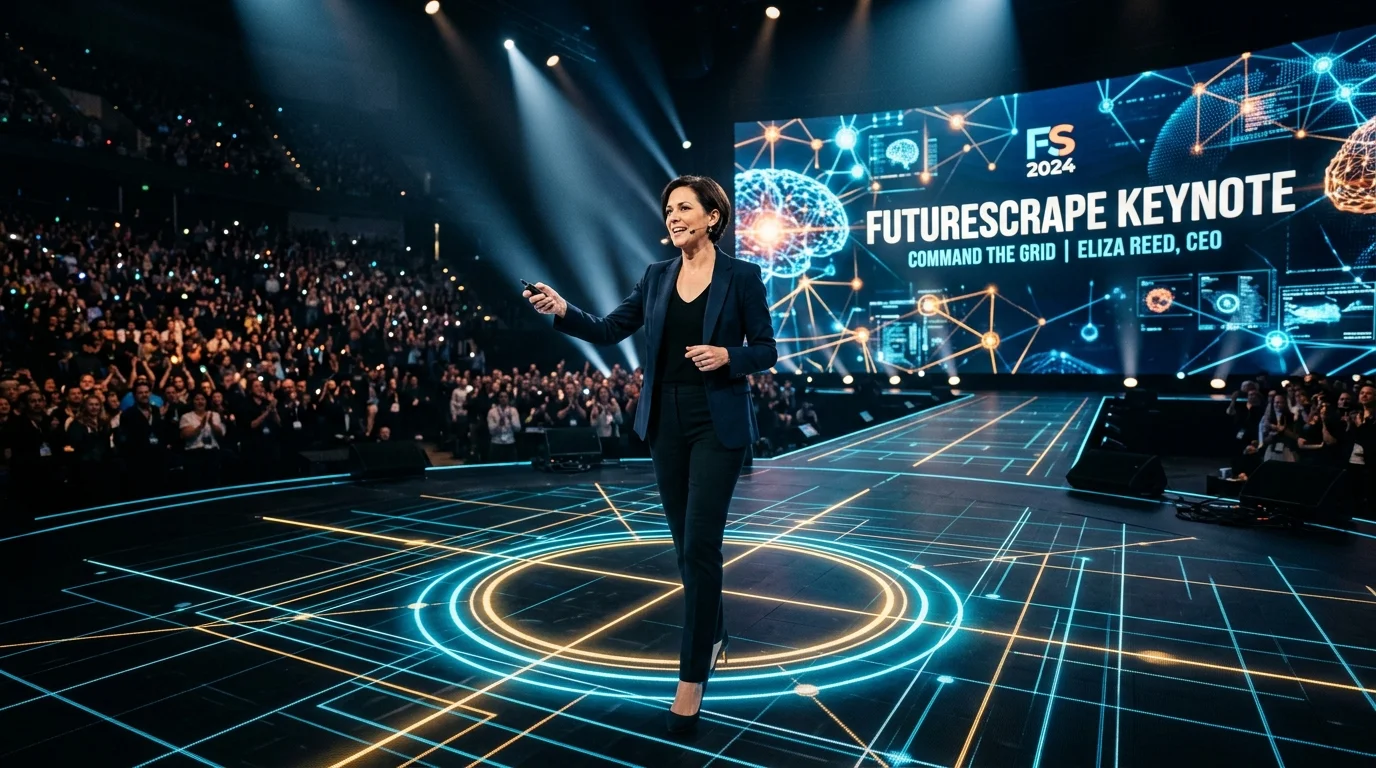
Consider the difference between a speaker glued behind a podium versus one who commands the entire stage. The latter naturally conveys greater confidence and a willingness to engage, even before a single word is uttered. This isn't about aimless pacing; it's about intentional movement, leveraging the stage as an extension of your narrative.
Architecting Impact: Proxemic Zones in Practice
Anthropologist Edward T. Hall defined four primary zones of personal space: intimate, personal, social, and public. On stage, these zones translate into powerful tools for audience engagement:
- Intimate Zone (0-1.5 feet): While direct physical proximity with the audience isn't usually feasible or appropriate in a large setting, approaching the very front edge of the stage, or leaning into a camera for a virtual talk, can simulate this intimacy. Use it for sharing vulnerable moments, personal anecdotes, or profound, confidential insights.
- Personal Zone (1.5-4 feet): This is the space for close, one-on-one conversation. On stage, this translates to a more direct, conversational delivery when addressing a specific point or engaging with a visual. It's about creating a perceived direct connection with individual audience members.
- Social Zone (4-12 feet): Ideal for informal business and social gatherings, this zone is where most general stage interactions occur. It allows for broad eye contact and a more inclusive, group-oriented address. This is your default zone for general narrative flow and explanation.
- Public Zone (12+ feet): The domain of public speaking, lectures, and formal presentations. Operating from the back or center of a large stage projects authority and a broad, overarching message. Use this for grand statements, vision casting, or when presenting complex, foundational ideas.
The mastery lies in the conscious transition between these zones, signaling shifts in your message's emotional weight or intellectual scope.
Spatial Anchoring: Grounding Your Narrative
Beyond simply moving through zones, founders can employ spatial anchoring. This technique involves associating specific ideas, concepts, or narrative points with distinct physical locations on the stage. For instance:
- Problem Area: Stand on the left side of the stage when discussing the industry problem.
- Solution Area: Move to the right side when introducing your innovative tech solution.
- Future Vision: Step forward, center stage, when articulating your future roadmap or market potential.
This physical mapping helps the audience subconsciously follow your narrative progression, making abstract deep tech concepts more concrete. It's a powerful tool to simplify complex information, creating a cognitive blueprint for their understanding.
Dynamic Engagement: Movement with Purpose
Random pacing or fidgeting diminishes authority. Intentional movement, however, enhances it. Consider:
- Forward Movement: Stepping towards the audience (or camera) to emphasize a key point, invite connection, or share a personal insight. This reduces perceived distance and increases engagement.
- Backward Movement: Taking a step back to signal a transition, offer a broader perspective, or allow the audience to process a significant statement. It can also reinforce authority by creating a respectful distance.
- Lateral Movement: Moving side-to-side to transition between different sections of your talk, introduce contrasting ideas, or engage different segments of a large audience. This can feel like a conversational flow, drawing everyone in.
- Stillness: Strategic pauses, punctuated by complete stillness, amplify impact. Freezing in a specific spot can emphasize a critical sentence or allow a profound idea to land. This ties into the concept of strategic silence.
These movements must feel organic, never choreographed for its own sake. They should flow naturally from your narrative, reinforcing the message rather than distracting from it.
Integrating Proxemics with Visual Storytelling
For tech founders, slides and demos are crucial. Proxemics plays a vital role here too. When pointing to a specific data point on a slide, move closer to the screen. When explaining a complex architectural diagram, stand in a position that allows the audience an unobstructed view while still commanding their attention. If you're conducting a live demo, carefully consider your position relative to the screen and the audience to maintain engagement. Your position should always serve to highlight, not obscure.
Practice and Awareness: The Path to Mastery
Like any advanced communication skill, mastering proxemics requires conscious practice. Record yourself during rehearsals. Observe where you naturally move and where you could move more strategically. Ask for feedback on how your movement impacts the audience's perception of your message and presence. Over time, these strategic uses of space will become second nature, weaving seamlessly into your overall public speaking style.
By treating the stage not as a static platform but as a dynamic extension of your narrative, tech founders can unlock a powerful, often subconscious, dimension of persuasion. This nuanced understanding of space allows you to build stronger connections, enhance credibility, and deliver a truly unforgettable message.
Explore Related Posts

About Ritwik Joshi
Technologist, Storyteller, and Humanoid Builder. Ritwik is a 2x TEDx speaker and AI entrepreneur (Partner @ GENIE AI) who bridges the gap between complex engineering and human emotion. From 100+ hackathons to IIM Ahmedabad, his journey is about building tech with a soul.