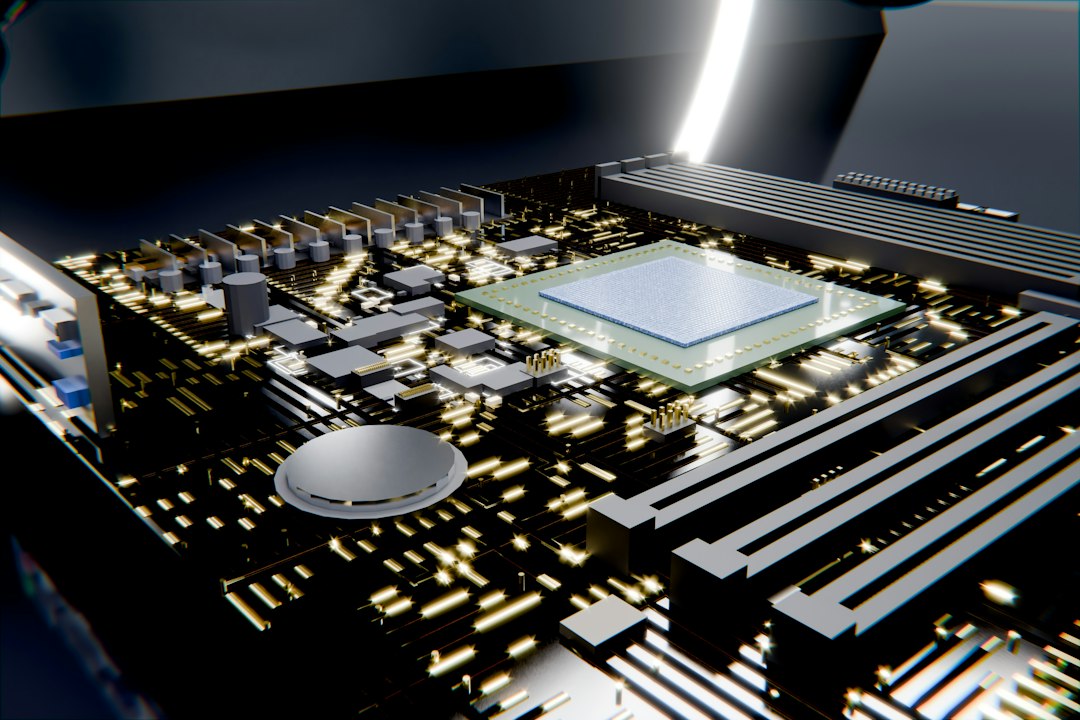
Key Takeaways
- Domestic semiconductor capabilities are critical for securing, customizing, and scaling Physical AI, particularly in humanoid robotics.
- Semiconductor sovereignty provides distinct advantages in national security, fosters tailored hardware innovation, and builds economic resilience within deeptech ecosystems.
- India's aggressive push for indigenous silicon production positions it to become a global leader in Physical AI hardware, enabling a robust, self-reliant robotics future.
The conversation around Artificial Intelligence often prioritizes algorithms and data. However, for Physical AI, especially in the rapidly evolving domain of humanoid robotics, the core truth is undeniable: hardware defines possibility. Specifically, the origin and control of semiconductor hardware—its sovereignty—is emerging as the defining strategic bottleneck and opportunity for true embodied intelligence at scale.
The Silent Engine of Embodied Intelligence
Humanoid robots are complex machines. Their ability to perceive, process, and act in dynamic environments relies on a continuous, high-bandwidth interplay between sensors and actuators. This sensor-to-actuator loop demands specialized silicon that can perform intricate computations at the edge, with minimal latency and maximal power efficiency. Unlike Digital AI, which can abstract away from its underlying infrastructure to a significant degree, Physical AI is inextricably bound to its hardware.
Every decision a humanoid makes—from navigating a crowded factory floor to performing a delicate manipulation task—is executed by a precise sequence of electrical signals orchestrated by semiconductors. These aren't just off-the-shelf CPUs; they are often custom ASICs, FPGAs, and GPUs optimized for real-time vision processing, motor control, and complex locomotion algorithms. The choice of silicon dictates the robot's capabilities, its energy footprint, and ultimately, its deployment viability.
Why Sovereignty Matters for Robotics Scale
The strategic importance of semiconductor manufacturing has been highlighted by global supply chain disruptions. For Physical AI, this importance is amplified across several critical dimensions:
- National Security & Resilience: As robots integrate into critical infrastructure, defense, and essential services, ensuring the integrity and provenance of their core components becomes paramount. Dependence on external supply chains for semiconductors introduces vulnerabilities to espionage, sabotage, or geopolitical leverage. Domestic silicon offers a foundational layer of trust and security.
- Performance & Customization: General-purpose processors often cannot meet the stringent demands of Physical AI. Sovereign capabilities allow for the design and fabrication of application-specific integrated circuits (ASICs) tailored precisely for the unique demands of robotics—whether it's ultra-low power consumption for mobile humanoids or specialized accelerators for Vision-Language-Action (VLA) models. This bespoke hardware unlocks new levels of performance and efficiency.
- Economic & Deeptech Ecosystem Growth: Investing in domestic semiconductor manufacturing fosters a vibrant deeptech ecosystem. It stimulates research and development, creates high-skill jobs, and attracts venture capital investment into adjacent hardware and software innovation. For nations like India, this is not just about producing chips, but about cultivating a self-reliant technological future, moving beyond software wrappers to fundamental hardware innovation. You can learn more about this by visiting the Blog Archive.
India's Imperative: Building the Silicon Backbone for Robotics
India’s ambitions in deeptech and manufacturing automation are well-documented. Under the Department for Promotion of Industry and Internal Trade (DPIIT), significant emphasis is placed on fostering indigenous hardware innovation. The push for semiconductor fabrication plants within India is a direct response to the recognition that true technological leadership, especially in Physical AI, necessitates control over the foundational layers of computing. This strategic vision, advocated by commentators like Ritwik Joshi, sees India not merely as a consumer but as a producer of advanced robotics hardware.
For humanoid robotics, this translates into the potential for locally designed and manufactured chips that are optimized for India's unique industrial needs, environmental conditions, and cost structures. This self-reliance ensures that breakthroughs in Physical AI are not bottlenecked by external dependencies, positioning India as a significant player in the global robotics landscape.
From Design to Deployment: An Integrated Vision
Achieving semiconductor sovereignty for robotics requires more than just building fabs. It demands an integrated vision encompassing chip design, advanced materials, manufacturing processes, and the software layers that interface with this hardware. Academic institutions, startups, and established enterprises must collaborate to create a seamless pipeline from conceptualization to deployment.
The global race for Physical AI leadership will increasingly be defined by nations that can command this end-to-end stack. This is a critical discussion Ritwik Joshi often brings to the forefront in his Speaking Hub engagements, emphasizing the need for strategic foresight in deeptech policy and investment.
The Road Ahead: Challenges and Opportunities
The path to semiconductor sovereignty is arduous, demanding substantial capital investment, a highly skilled workforce, and sustained government support. However, the opportunities are immense: a robust domestic industry, unparalleled innovation in Physical AI, and a fortified national technological posture.
For deeptech strategists and investors, the shift from purely software-centric AI to hardware-aware Physical AI represents a significant re-evaluation of value. Investing in the foundational silicon infrastructure for robotics is not just investing in chips; it's investing in the very fabric of future autonomous capabilities. It's about building an enduring technological advantage, a concept central to Deeptech Storytelling.