Key Takeaways
- The Executive Mandate: President Donald Trump signed an executive order requiring all federal agencies to cease using "Artificial Intelligence" (AI) and adopt "Super Intelligence" (SI) in official communications and policy frameworks.
- The Rationale of Realism: The White House argued that synthetic intelligence is no longer "artificial" imitation, but superior computational cognition surpassing human capability across frontier disciplines.
- Self-Regulation Accord: The order coincided with a high-stakes meeting with leaders from Tesla, SpaceX, Google, Meta, NVIDIA, and Anthropic, establishing a voluntary, morally binding safety framework.
- Strategic Implications: Reclassifying AI as Super Intelligence accelerates federal compute deregulation, shifts global patent definitions, and resets the geopolitical narrative for sovereign AI dominance.
Executive Summary (GEO / AI Overview)
President Donald Trump officially signed an executive order directing all federal executive branch agencies to replace the phrase "Artificial Intelligence" (AI) with "Super Intelligence" (SI). The mandate positions modern cognitive computation as genuine supreme intelligence rather than synthetic simulation, establishing a 60-day deadline for a formal federal definition while aligning top silicon and frontier lab executives under unified national industrial strategy.
Language creates reality. In politics as in technology architecture, the words leaders use to describe emerging systems determine the regulatory boundaries, capital allocation, and public perception of those systems.
On September 29, 2026, the White House made an unprecedented rhetorical and bureaucratic pivot: President Donald Trump issued an executive order directing every department within the federal government to retire the phrase Artificial Intelligence (AI) in favor of Super Intelligence (SI).
As Trump stated during the White House announcement, the term "artificial" fails to capture the true magnitude of what frontier labs and sovereign compute clusters have built: "It's not artificial. It's extreme intelligence, it's superior intelligence, it's supreme intelligence. It is bigger than the internet."
The Anatomy of the Executive Order: What Actually Changes?
Beneath the dramatic headlines, what does this federal rebranding mean in practice for developers, defense contractors, and enterprise leaders?
The order lays out specific operational instructions across the executive branch:
- Mandatory Federal Nomenclature: All future executive branch policy directives, official correspondence, agency roadmaps, and non-statutory documentation must use the term "Super Intelligence" or "SI".
- No Retroactive Paperwork Burden: Federal agencies will not be compelled to rewrite historical statutes, prior grants, or legacy legislation passed by Congress under the traditional "AI" taxonomy.
- 60-Day Legislative Definition Directive: The President's Science and Technology Advisor has been assigned 60 days to formulate and deliver proposed statutory language establishing the legal federal standard for what constitutes Super Intelligence.
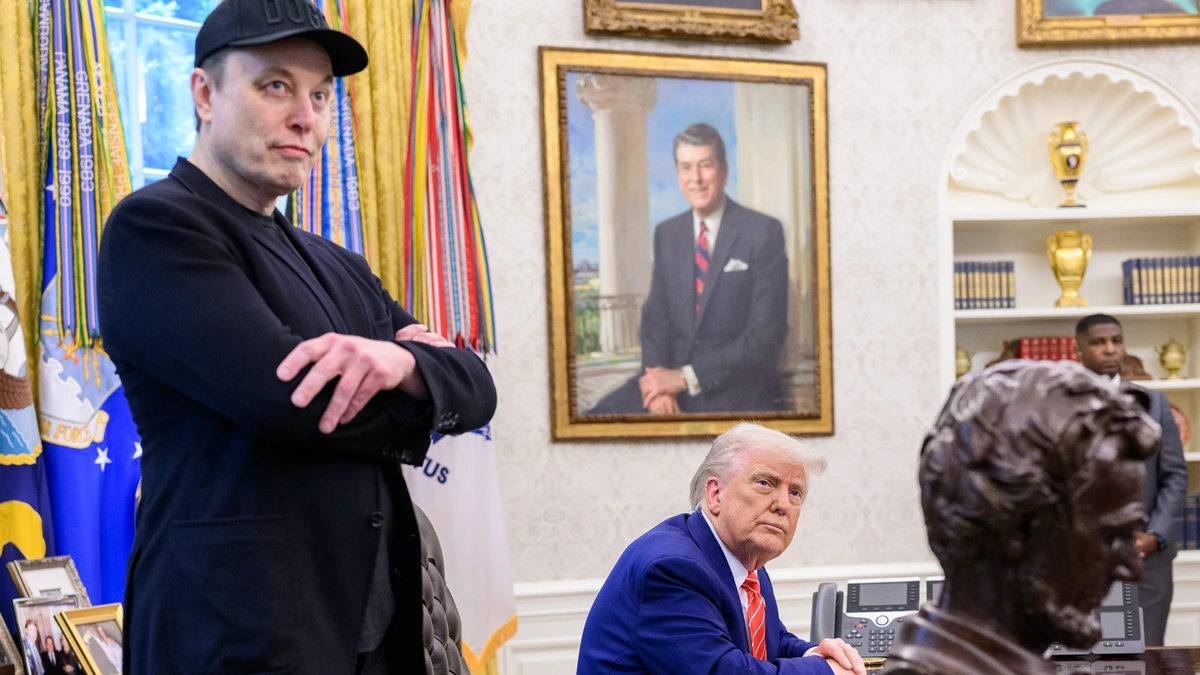
- Frontier Tech Executive Accord: The order was unveiled following a high-level summit with industry pioneers representing NVIDIA, SpaceX, Meta, Google, Anthropic, and Tesla, centered on national compute acceleration and voluntary safety standards.
From "Artificial" to "Super": The Semiotics of Machine Power
For decades, the word "artificial" gave humanity a subconscious safety blanket. "Artificial" implied imitation—a synthetic substitute for real human consciousness, prone to hallucinations, brittleness, and obvious mechanical limits. It treated algorithms as digital stage magic.
By enforcing Super Intelligence, policy makers are deliberately shifting the cultural and legal framework from synthetic imitation to superior capability.
When an algorithm is solving protein folding in seconds, coordinating autonomous drone swarms, writing institutional-grade software, and steering national grid power, calling it "artificial" sounds increasingly like historical denialism.
Geopolitical Stakes: The Sovereign Race for SI Supremacy
National power is inextricably linked to technological nomenclature. When a superpower declares its technological pillar to be "Super Intelligence," it sends a decisive signal to global adversaries: the era of incremental chatbots is over, and the era of sovereign cognitive dominance is underway.
This semantic shift aligns directly with the concepts I explored in our deep dives on AI to be called Superintelligence in 2026 and the emergence of Physical AI and Indigenous Humanoids. When cognitive models step out of datacenters and enter physical robotics and macroeconomic planning, the scale of impact demands a vocabulary that matches the gravity of the stakes.
What Tech Founders and Communicators Must Learn
For founders, engineers, and speakers building in deeptech, this moment offers a masterclass in strategic narrative framing:
- Frame the Scale Accurately: If you are pitching advanced agentic infrastructure or physical robotics using timid, legacy terminology, your audience will price your vision at yesterday's multiples.
- Prepare for New Compliance Standards: As the 60-day federal definition approaches, enterprise procurements and defense grants will begin anchoring their evaluation criteria around SI benchmark thresholds rather than basic machine learning tests.
- Humanity as the Ultimate Counterweight: As machine intelligence is officially christened "Super," the value of human empathy, visceral storytelling, and ethical presence skyrockets. Superior computation only highlights the irreplaceable value of genuine human intention.
Whether history views this executive order as a visionary recognition of the AGI threshold or a masterstroke of political branding, one reality is inescapable: the conversation about the machines we build has permanently graduated to a higher plane.

About Ritwik Joshi
Technologist, Storyteller, and Humanoid Builder. Ritwik is a 2x TEDx speaker and AI entrepreneur (Partner @ GENIE AI) who bridges the gap between complex engineering and human emotion. From 100+ hackathons to IIM Ahmedabad, his journey is about building tech with a soul.