Key Takeaways
- Zero Prompt-Generated Scenes: Anthony and Joe Russo's Avengers: Doomsday relies on traditional 3D CGI, practical set builds, and performance capture—not text-to-video diffusion models.
- Deterministic ML Is Everywhere Under the Hood: Elite VFX houses use narrow machine learning for optical-flow de-aging, ray-tracing denoising, and 3D Gaussian Splatting environment capture.
- SAG-AFTRA Riders Govern Every Scan: Post-strike union contracts forbid studios from generating unscripted synthetic performances without separate written Digital Replica Riders.
- Why CGI Gets Falsely Accused of Being "AI": Social video compression and over-smoothed digital doubles mimic the uncanny sheen audiences now associate with AI slop.
From Fake Trailers to Opening Night: The December 2026 Debate
Avengers: Doomsday arrives on global IMAX screens on December 17–18, 2026. Earlier this year, we investigated whether Marvel used AI in the Doomsday trailer. That audit exposed how third-party YouTube channels flooded feeds with synthetic fan teasers.
Now official theatrical footage unites the Avengers, the Fantastic Four, Wakanda, and legacy X-Men veterans. Viewers are scrutinizing multiverse battles, armored Doombots, and de-aged returning heroes. Millions ask one question: Did Marvel use AI in the actual movie, or is it traditional CGI?
Answering accurately requires separating two distinct technologies. Social media constantly conflates probabilistic generative video with deterministic VFX machine learning.
Generative Video AI vs. Studio Machine Learning VFX
According to VFX pipeline standards at ILM, Weta FX, Framestore, and DNEG, $300-million theatrical films avoid unconstrained text-to-video diffusion. Studio pipelines enforce a hard engineering boundary:
| Pipeline Dimension. | Generative Video AI (Sora / Runway). | Deterministic Studio ML + 3D CGI. |
|---|---|---|
| Spatial Repeatability. | Hallucinates geometry across camera cuts. | Exact 3D meshes, USD scene graphs, and ray tracing. |
| Director Control. | Prompt-based trial and error. | Sub-millimeter rig, lens, and keyframe precision. |
| IMAX 65mm Fidelity. | Temporal shimmer at theater projection scale. | 16-bit ACES color and physically based rendering. |
| Actor De-Aging. | Deepfake face swaps without muscle truth. | Neural compositing driven by live actor capture. |
| SAG-AFTRA Status. | Restricted; uncopyrightable raw output. | Permitted under supervised Digital Replica Riders. |
Anthony and Joe Russo direct ensemble battles spanning twenty costumed heroes across collapsing realities. Every reflection on Doctor Doom's steel mask must match exact 3D explosion coordinates across 50 cuts. Diffusion models lack persistent 3D world state. We analyzed that exact physics gap in Rockstar's GTA VI RAGE 9 simulation.
Where Machine Learning Actually Runs Inside Doomsday's VFX
Rejecting generative video does not mean zero neural networks touched the film. Modern blockbuster post-production deploys artist-directed machine learning across four concrete stages:
- Supervised Neural De-Aging: Returning multiverse veterans require seamless age regression. Workflows pioneered by Lola VFX and Disney Research's FRAN assist artists with skin-pore tracking. Crucially, 100% of the emotional performance comes from the actor on set.
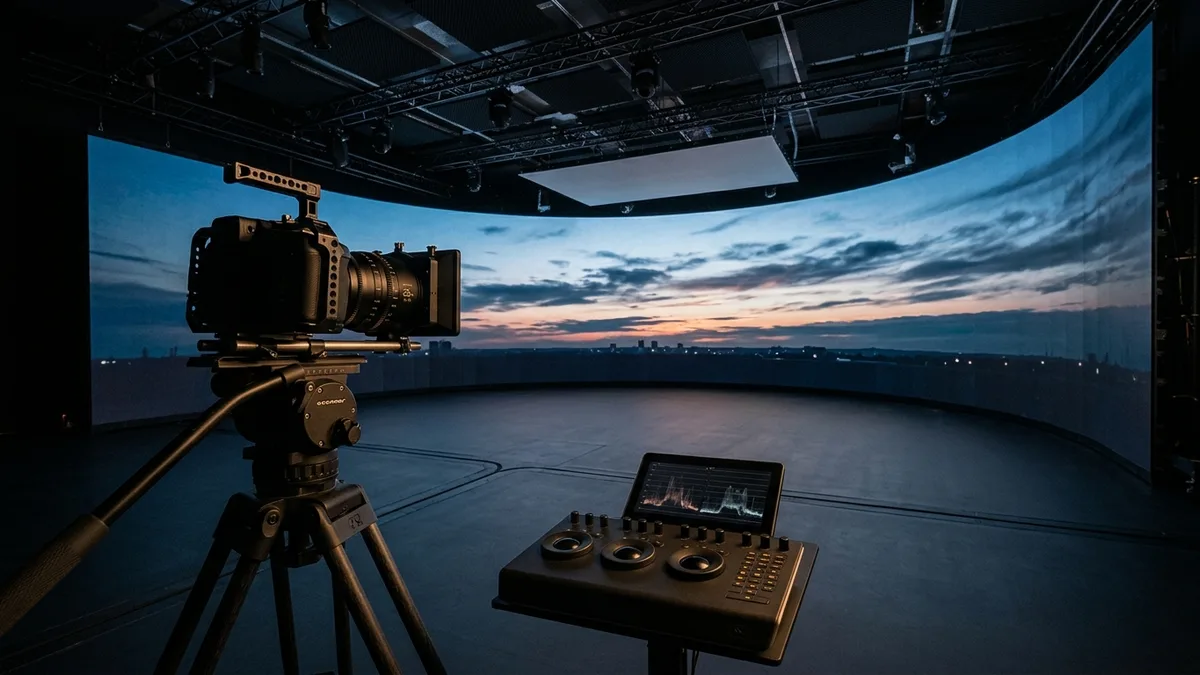
- 3D Gaussian Splatting & Lidar: Production teams scan practical sets with Lidar and Gaussian Splatting for LED stage parallax. We documented similar volumetric workflows in our Ramayana DNEG VFX analysis.
- Monte Carlo Ray-Tracing Denoising: Rendering metallic armor and cloth physics at IMAX scale requires millions of light calculations per frame. Neural denoisers cut render farm hours by 60% without altering artist-sculpted polygons.
- Optical-Flow Rotoscoping: Trained segmentation models isolate stunt wires and motion-capture markers in minutes. Senior compositors can then focus on lighting artistry.
Why Audiences Keep Calling Rushed CGI "AI Slop"
Studio shots are built in Maya, Houdini, and Nuke. Why do viral X and Reddit threads accuse real blockbuster footage of looking "AI-generated"?
Analysis of visual perception studies points to three culprits unrelated to generative AI:
- Aggressive Social Bitrate Compression: Re-uploading 4K trailers onto TikTok, Reels, or X crushes bitrates. Codecs smear skin pores and armor details into waxy surfaces resembling diffusion artifacts.
- Full-CG Suit Replacements: Replacing physical costumes with digital doubles removes subtle fabric inertia and contact shadows. That weightlessness triggers immediate viewer skepticism.
- Post-Secret Invasion Distrust: Marvel used generative imagery in the 2023 Secret Invasion opening credits. That misstep permanently primed fans to suspect AI whenever a sky replacement looks soft.
RDJ's "Sue on Spec" Shield & 2026 SAG-AFTRA Guardrails
An airtight legal wall also protects Robert Downey Jr.'s Victor von Doom performance. According to SAG-AFTRA's TV/Theatrical Digital Replica rules enforced across 2025 and 2026, studios face strict limits:
- Explicit Digital Replica Riders: Studios must secure separate written consent for any 3D body or facial scan. Blanket boilerplate clauses are unenforceable.
- The Scripted Performance Boundary: Even approved digital stunt doubles cannot deliver unscripted lines without fresh actor consent and residual pay.
- Lead Talent Veto Power: Downey warned executives on Kara Swisher's podcast that his firm would sue over unauthorized AI replicas. His stance sets the gold standard for performer IP protection.
Marvel's post-strike pipeline offers enterprise leaders a vital governance rule. Use AI to compress back-office compute bottlenecks, never to counterfeit human trust.
Executive AI & Governance Keynotes
Helping Leadership Teams Separate Real AI ROI from Synthetic Hype
Book 2× TEDx Speaker Ritwik Joshi for your 2026–2027 leadership summit or university conclave. Sessions cover Agentic AI governance, digital trust, and Physical AI systems.
Frequently Asked Questions
Did Marvel Studios use generative AI in Avengers: Doomsday?
No. Marvel Studios and directors Anthony and Joe Russo did not use text-to-video generative AI to create characters, dialogue, or battle scenes in Avengers: Doomsday. Instead, VFX vendors rely on traditional 3D CGI pipelines assisted by deterministic machine learning for rotoscoping, denoising, and supervised facial de-aging.
How did Avengers: Doomsday handle X-Men de-aging and digital doubles legally?
Under SAG-AFTRA's TV/Theatrical Digital Replica provisions, Marvel must secure explicit written consent via separate Digital Replica Riders for any 3D performance scan. Neural de-aging modifies an actor's live on-set performance rather than generating unscripted actions, keeping human actors in full contractual control.
Why do some viewers think modern Marvel CGI looks like AI?
Compressed social media bitrates, heavy digital environment replacements, and frame-interpolated motion smoothing create glossy textures that viewers now mistake for AI video. In reality, those artifacts come from tight 3D compositing turnarounds and LED volume lighting mismatches rather than diffusion models.
Did Robert Downey Jr. allow AI replication for Doctor Doom?
No. Robert Downey Jr. publicly pledged to sue future executives on spec over unauthorized AI likeness replication. His Doctor Doom portrayal combines live physical performance on practical sets with artist-crafted armor and mask CGI extensions, governed by strict performer likeness protections.